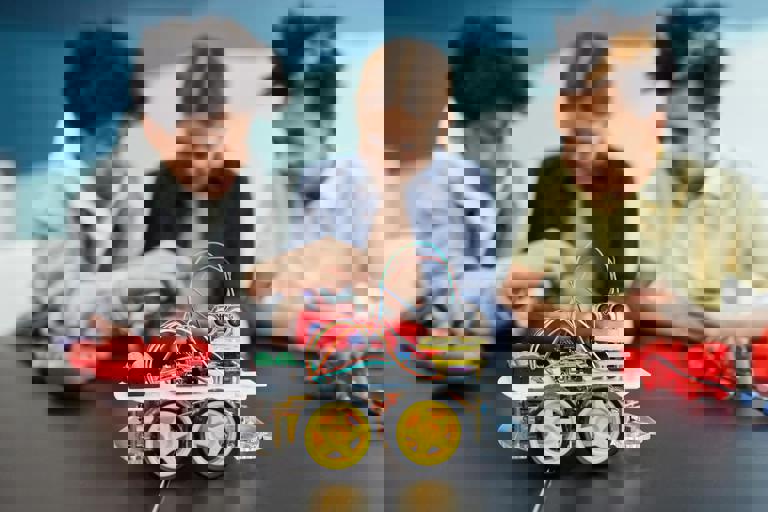
A local primary school has been awarded a significant grant to establish a state-of-the-art Robotics Learning Lab, offering pupils an exciting new way to engage with science, technology, engineering, and mathematics (STEM) subjects. Announced earlier this week, the funding arrives at a crucial time when schools across the United Kingdom are striving to equip students with the practical and analytical skills needed for an increasingly technology-driven world.
The grant, totalling £25,000, was made possible by a partnership between a regional education trust and a leading UK technology corporation committed to supporting future talent. This funding will be used to purchase robotics kits, computers, and other specialist equipment, as well as to develop a dedicated learning space within the school premises. Plans also include training workshops for teachers to ensure they feel confident delivering the new curriculum.
School headteacher Susan Carter expressed her excitement about the initiative, noting it marks a step forward for both staff and students. 'This grant enables us to give our children access to some of the most innovative resources available,' Carter said in a statement. 'It’s not just about learning to code or build robots—it’s about teamwork, problem-solving, and preparing our pupils for tomorrow’s jobs.'
The Robotics Learning Lab will cater to students across all year groups, ensuring broad exposure to age-appropriate robotics and coding challenges. Key components of the curriculum will include hands-on activities like constructing simple machines, programming basic autonomous robots, and participating in friendly competitions. By making STEM subjects interactive, the school hopes to ignite lasting enthusiasm among young learners who might not otherwise have considered such fields.
Recently published data from the Department for Education highlighted a concerning decline in the number of students choosing STEM subjects at GCSE and A-level. Experts point out the importance of early exposure, with studies showing that interest often begins at the primary school stage. This makes the new Robotics Learning Lab not just innovative, but strategically essential for encouraging long-term engagement with critical subjects.
Parents and carers have welcomed the news, with the school’s parent-teacher association (PTA) chairman, Mark Evans, describing the project as 'a fantastic opportunity to future-proof our children’s education.' He added, 'The skills they learn today—like logical thinking and collaboration—will be invaluable whether they pursue technology careers or not. We’re extremely grateful to both the trust and the corporate sponsors for making this possible.'
Teacher training will be a key element of the programme. Staff will attend a series of workshops run by industry professionals and educational technologists, focusing on both the technical and pedagogical aspects of teaching robotics. These sessions aim to build teachers’ confidence, ensuring that the lab is integrated seamlessly into everyday lessons rather than remaining an isolated resource.
The school plans to host an official launch event later this term, inviting local dignitaries, education officials, and representatives from the partner organisations. The event will offer students the chance to demonstrate their early projects and showcase what they have learned. It will also serve to strengthen ties between the school and the local community, fostering ongoing support for future STEM initiatives.
As part of its long-term vision, the school intends to establish extracurricular clubs and robotics leagues, allowing interested pupils to deepen their skills outside normal school hours. There are also plans to collaborate with neighbouring schools, sharing resources and expertise to maximise the impact of the grant. Such initiatives aim to create a wider culture of innovation that extends beyond a single classroom.
Looking ahead, success will be measured through both formal assessments and informal feedback from students and parents. The school hopes to see improvements in problem-solving abilities, communication skills, and interest in STEM subjects. In time, they also wish to track how the lab influences pupils’ subject choices as they move into secondary education and beyond.
Robotics industry leaders have praised the initiative, with Jane Stone, a regional director for the sponsoring tech firm, noting, 'Bringing robotics into the classroom demystifies technology. It shows children they can be creators as well as consumers. We hope to see this model replicated in other schools, so that every child has the opportunity to thrive in a digital future.'
On a national level, efforts to boost STEM engagement are widely seen as vital to the UK’s economic competitiveness. The British government has set ambitious targets for increasing the tech skills pipeline, reflecting the growing importance of AI, automation, and digital industries. Projects like the new Robotics Learning Lab could play a pivotal role in helping to meet these objectives over the coming years.
For now, excitement is mounting among pupils as the first equipment deliveries arrive and the classroom transformation gets under way. As one Year 5 student, Amelia Brown, put it: 'I can’t wait to build a real robot with my friends! I want to learn how things work and maybe be an engineer when I grow up.' With enthusiasm high and preparations in full swing, the school’s innovative project is already shaping young minds for the future.